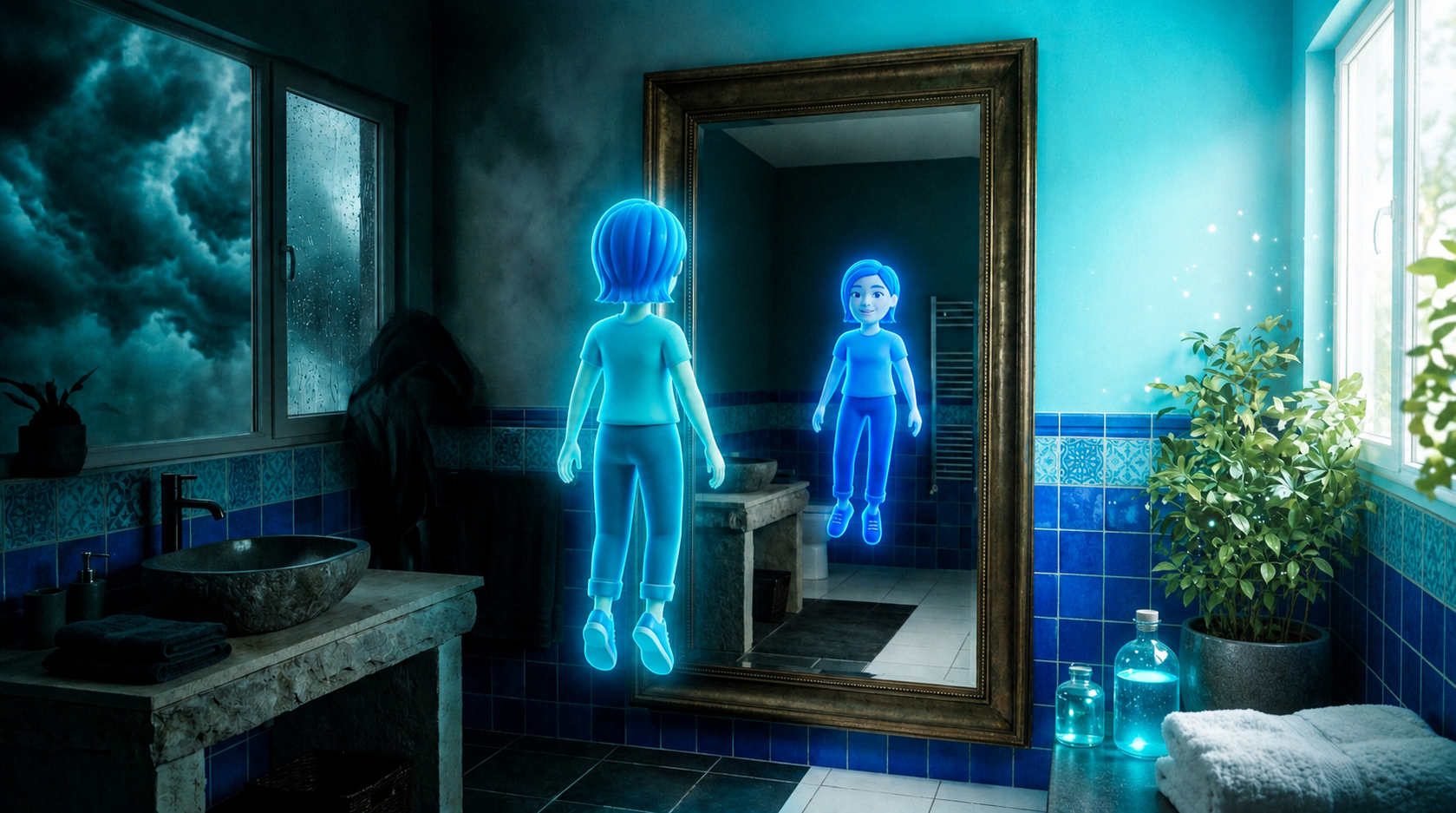
Step #1 - Understand that WE ourselves, are part of the problem
We like to villanize the platform companies, or the company owners. But who among us is actually willing to leave our favorite platforms?
The walled gardens have risen because they profit by facilitating the sharing of information. But each one has erected their own Castle - their own little Kingdom. You can enter, if you grant the King your pittance donation of your basic information - and a never ending flow of new information as time goes on. But if we can accept that we ourselves are part of the problem, that means we can also be part of the solution.
This all has to do with Numbers.
Data.
Data drives advertising budgets.
Profit from advertising campaigns drives annual profits for the company, and therefore increased value in the stock for the stock holders.
But it's not just the information you post - your interests, your thoughts, your images, and references, and reposts. It's the profile-analytical information that they can deduce by digital analysis (AI analysis) of your behavior.
The companies that develop the 'stickiest' platform - the one that is connected to everything and everyone and never goes away, and grows like a weed that sucks oxygen from all the other plants in the garden, Keeps growing. Of course the weed doesn't think it's a weed. It's up to the gardener to decide which plants are weeds and which ones are not-- and which ones need to be contained in their own pot - not connected to others.
Step #2 - Take Agency over your digital experience
This is where the great power shift lies. Ultimately, we decide.
We decide which apps to use and which to not.
This might be the right place to mention that there is this concept of multi-distributed-computer-networks. Stick with me - I'm going to explain this very simply. You see, with large scale computer networks, there are 2 basic fundamental architectures.
The first architectural pattern is centralized, with a closed protocol.
Think Google, Amazon, Facebook, Twitter, Instagram, etc. Those benefit from the principle of economics of scale, and the power and the strength of their own particular network effects. They're in control of the User Experience - so they built ones that are really good at grabbing and keeping your attention. But all we have to do - is build our own. Build the kind WE like. That's the power of the 2nd architectural pattern.
The second architectural pattern is De-centralized, with an open protocol.
A platform that runs on a network that is DECENTRALIZED... means that it runs because a whole ton of people worldwide are running the software. You don't have to run the software to be part of the network - it's just that the more people running the software the better, go Nerds!
But the beauty here is the open-protocol and decentralization means that you own your data - you can post freely without censorship, and you can move your account to another client. There's no central control that owns the data.
Step #3 - Get to Work
So my call to arms for you is that if you have an opinion about how social media works or should or shouldn't work, I invite you to be part of the solution. Spend part of the time you would normally spend on their platforms, to find alternatives. They're out there. There's a lot. And here's a list:
BlueSky - is a good alternative to Twitter / X
Fountain - is a good alternative to YouTube
Primal - is another good alternative to Twitter / X, that uses NOTSR as the underlying protocol.
BitChat - a new Blue-tooth based communication protocol (no cell tower intercepting your conversations!)
And If these don't work the way you want them to, search around - you will find a lot of other options. And you can make suggestions to the builders of these apps. AND to the most fervent soldiers of righteousness amongst you I say go out and build your own! It's thoroughly possible. Or find a way to contribute or be part of the conversation around developing these alternative systems. This feels like the more difficult path. We have to make decisions around it - which means we have to become informed and form an opinion about it all. It's work. So what I say is, GET TO WORK, People!
RealTalk
So it's easy to preach righteousness, but where am I at, personally? I'll be honest and say that I stopped posting on FB several years ago and don't spend any time on there. I do still have an account though so once in a while I can watch some silly cat video that my friends send me. And I still spend a large amount of time on YouTube. Less so on X. But I'm moving my podcasts all over to Fountain, when I can. And I'm weaning myself off of X and migrating to BlueSky and Nostr, (via Primal). It's a challenge to re-build the aspects of each platform that we become accustomed (addicted) to - on these other free-er, more open-source platforms because they don't have the algorithms that were built to get us addicted in the first place. So when we start to switch over, it feels "not as good" or as though "not as many of the right people are over there posting"... So once again we have to take a look in the mirror and ask ourselves, was the excitement and addiction of the platform real (and good) for me? Or was it manipulating my dopamine receptors to make me think I was having important conversations and experiences. Maybe we're better off getting away from the big screen that the Wizard of Oz is on, and look behind the curtain, or just go to a different venue - sit at a cafe table, have a cappuccino and continue on with our own lives, without the 'big-screen' production telling us what life is about. Take a look around you - right in front of you - photograph, document and share that - and build your audience using decentralized platforms, and you will at the very least, be part of the solution.